

Modern electronic systems are increasingly deployed in dynamic and harsh working environments, where continuous vibration, mechanical impact and structural shaking have become major threats to circuit connection stability. For industrial control equipment, vehicle-mounted electronics and portable intelligent terminals, subtle structural loosening caused by long-term vibration often leads to poor signal contact, intermittent power failure and shortened component service life. In response to these industry pain points, anti-vibration structural optimization has become a key technical direction for upgrading electronic connection solutions, effectively improving the overall operational reliability of micro connection components.
Traditional connection structures often adopt simple assembly designs that lack targeted vibration resistance. Under frequent mechanical vibration, the matching gap between structural parts gradually expands, resulting in offset displacement and elastic fatigue of conductive shrapnels. Such hidden dangers are difficult to detect in daily use but will trigger system failures in high-frequency operating scenarios. Therefore, optimizing internal structures to enhance vibration resistance has become an indispensable part of high-reliability electronic component research and development.
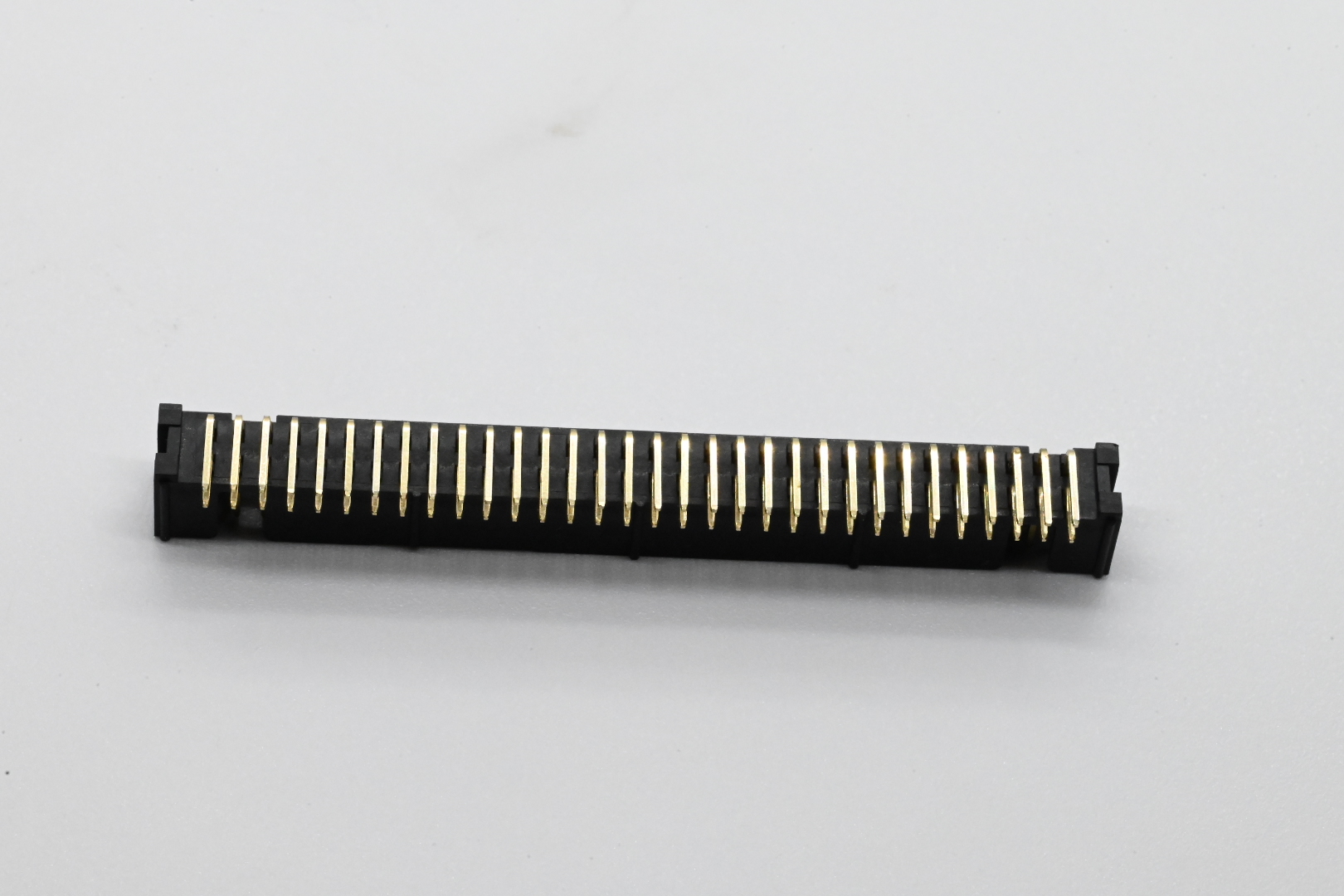
Ejector Header solutions have achieved comprehensive performance improvement through targeted anti-vibration structural iteration. Different from ordinary pin header structures, the optimized structure adds reinforced positioning buckles and balanced elastic support designs. This structural upgrade effectively offsets external vibration interference, maintains stable fitting accuracy between pins and sockets, and greatly reduces the risk of loose connection caused by mechanical shaking.
Structural optimization focuses on two core dimensions: stress dispersion and gap control. Engineers adjust the geometric radian of the locking structure and optimize the material stress-bearing distribution, avoiding local fatigue and deformation under long-term vibration circulation. At the same time, precise tolerance control eliminates excessive assembly gaps, ensuring that the connection structure always maintains a compact and stable state in complex working conditions.
The improvement of anti-vibration capability directly enhances the environmental adaptability of electronic connection systems. In automotive electronics, intelligent manufacturing equipment and outdoor IoT devices, mechanical vibration exists throughout the equipment operation cycle. High-reliability structural design enables connection components to maintain consistent signal transmission and power supply performance, avoiding sudden system downtime caused by connection failure.
In addition to mechanical stability optimization, anti-vibration structural design also promotes the improvement of product durability and batch consistency. Through finite element vibration simulation testing, manufacturers can accurately verify structural stability under different vibration frequencies and strengths, eliminate design defects in advance, and realize standardized and high-quality mass production of connection components.
With the continuous upgrading of terminal electronic equipment, the industry has put forward stricter requirements for component anti-vibration and anti-shock performance. Relying on mature structural optimization technology, modern connection solutions no longer rely solely on material hardness improvement, but realize systematic reliability enhancement through structural mechanics optimization, modular locking design and stress balance adjustment.
Industry professionals indicate that anti-vibration structural optimization will remain a core technical trend in the micro-connection industry. Continuous structural innovation will further help electronic equipment adapt to diversified and harsh application scenarios, provide stable and lasting connection guarantees for intelligent terminal systems, and drive the high-quality development of the entire electronic interconnection industry.